

The IRS Form 6765 instructions explain how businesses can claim the Research and Development Tax Credit by reporting qualified expenses and choosing the right calculation method.
Table of Contents
What Exactly is Form 6765?
Who Should Pay Attention to These Instructions?
The Four Rules Your Research Must Follow
What Costs Actually Count as Qualified Expenses
Walking Through the Form Step by Step
The Regular Method vs. The Simplified Method
Special Opportunity for Startups and Small Businesses
Common Mistakes That Delay or Deny Claims
Making the Instructions Work for Your Business
Frequently Asked Questions
1. What Exactly is Form 6765?
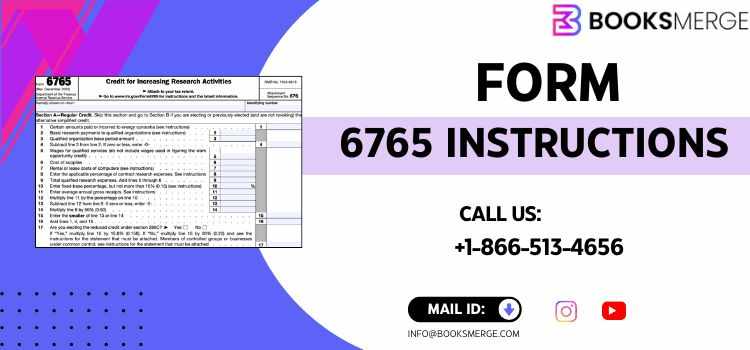
Let's start with the basics. Form 6765 carries the official title "Credit for Increasing Research Activities," but most people simply call it the R&D Tax Credit form. Unlike a Form 1099 which reports payments to others, this form is something you file for your own business's benefit. It's the government's way of saying "thank you for innovating" by offering a dollar-for-dollar reduction in your tax liability.
The Instructions for Form 6765 serve as your roadmap through what can feel like complicated territory. They tell you not just where to put numbers, but which numbers actually qualify and how to perform the calculations that determine your credit amount. Many businesses miss this credit simply because they find the IRS Form 6765 instructions overwhelming, but breaking them down makes the process manageable.
2. Who Should Pay Attention to These Instructions?
You might be surprised. The R&D credit isn't just for tech companies in lab coats. If your business tries to develop or improve products, processes, techniques, formulas, or software, you might qualify. This includes manufacturers creating more efficient production methods, software companies developing new features, architects testing innovative materials, and even food companies creating new recipes.
The Instructions Form 6765 apply to various business structures:
C Corporations and S Corporations
Partnerships and LLCs
Even sole proprietors can claim the credit on their personal returns
3. The Four Rules Your Research Must Follow
Not every bright idea qualifies. The irs form 6765 instructions outline four specific tests your activities must pass:
Permitted Purpose: The research must aim to create a new or improved function, performance, reliability, or quality of a business component.
Technological in Nature: The work must rely on principles of engineering, computer science, physics, chemistry, or biological sciences.
Elimination of Uncertainty: You must be trying to eliminate technical uncertainty about the method or capability of development.
Process of Experimentation: This involves evaluating alternatives through modeling, simulation, systematic testing, or prototyping.
Think of it this way: developing a new app feature that requires solving technical problems qualifies. Simply customizing existing software for a client might not.
4. What Costs Actually Count as Qualified Expenses
Once you've identified qualified activities, you need to track the right expenses. According to the form 6765 instructions 2025, Qualified Research Expenses (QREs) fall into three categories:
Wages: For employees directly performing, supervising, or supporting the qualified research
Supplies: Tangible items used in the research process (but not equipment or land)
Contract Research: 65% of amounts paid to third parties for qualified research
A key distinction: these are different from expenses reported on Form 1099. That form reports payments to contractors, while these QREs represent costs your business incurs for its own innovation activities.
Quick Guide: Confused by the IRS form list? Get expert guidance and accurate filing from BooksMerge at +1-866-513-4656.
5. Walking Through the Form Step by Step
The current Instructions for Form 6765 guide you through several important sections:
Section A handles the Regular Credit calculation, which compares current year expenses to a historical base amount.
Section B covers the Alternative Simplified Credit (ASC), which uses an average of your previous three years' expenses.
Section C is where you report your current year credit amount after comparing methods.
Section D contains the special election for qualified small businesses to apply the credit against payroll taxes instead of income taxes.
6. The Regular Method vs. The Simplified Method
You'll notice the IRS Form 6765 instructions require you to calculate your credit two different ways:
The Regular Credit Method can be more complex. It involves determining a base amount from your historical gross receipts and research expenses, then calculating 20% of your current year expenses that exceed this base.
The Alternative Simplified Credit (ASC) is often more straightforward. You take 50% of your average qualified expenses from the prior three years, then calculate 14% of your current year expenses above that amount. If you have no prior research history, you can claim 6% of current year expenses.
7. Special Opportunity for Startups and Small Businesses
Recent updates to the Instructions Form 6765 include a valuable option for newer businesses. Qualified small businesses (those with less than $5 million in gross receipts and within their first five years) can elect to apply up to $500,000 of their R&D credit against their payroll tax liability. This is huge for startups that may not yet have income tax liability but still want to benefit from their innovation investments.
8. Common Mistakes That Delay or Deny Claims
Based on the irs form 6765 instructions, here are pitfalls to avoid:
Inadequate documentation of qualified activities and expenses
Claiming ineligible activities like market research or routine product updates
Mathematical errors in the calculation worksheets
Missing the election for the payroll tax credit if you qualify
Filing late or missing required attachments
9. Making the Instructions Work for Your Business
While the form 6765 instructions 2025 provide the technical guidance, applying them effectively requires understanding both the rules and your business's unique activities. Many businesses find that maintaining contemporaneous records throughout the year tracking projects, hours, and expenses makes the filing process significantly smoother. The most successful claimants treat the R&D credit not as a year-end surprise but as an integrated part of their financial planning.
Need help navigating these instructions for your specific situation? The professionals at BooksMerge can guide you through every step. Call us at +1-866-513-4656 for personalized assistance.
10. Frequently Asked Questions
Q: Where can I get the official Form 6765 instructions?
A: Download them directly from the IRS website at IRS.gov. Search for "Form 6765" and look for the instructions PDF.
Q: How is Form 6765 different from Form 1099?
A: Form 1099 reports income you paid to others. Form 6765 calculates a tax credit for research expenses your business incurred.
Q: Can I claim the credit if my research wasn't successful?
A: Yes. The credit applies to qualified research expenses regardless of whether the project ultimately succeeded.
Q: What records do I need to keep?
A: Maintain documentation of projects, technical challenges, experimentation processes, employee time allocation, and all related expenses.
Q: How far back can I claim the R&D credit?
A: Generally, you can amend returns going back three years to claim credits you may have missed, subject to specific rules and limitations.
Read Also: 1099-misc vs 1099-nec



Write a comment ...