
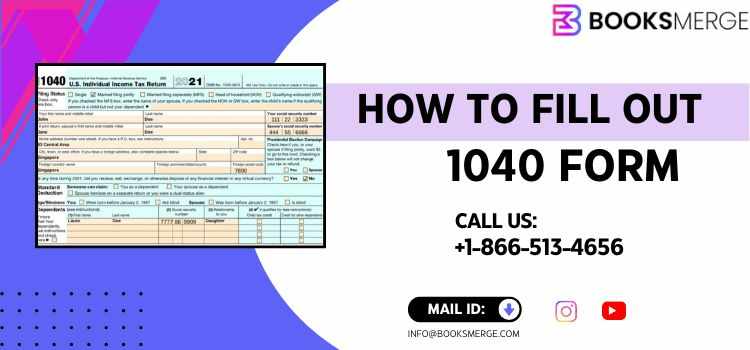
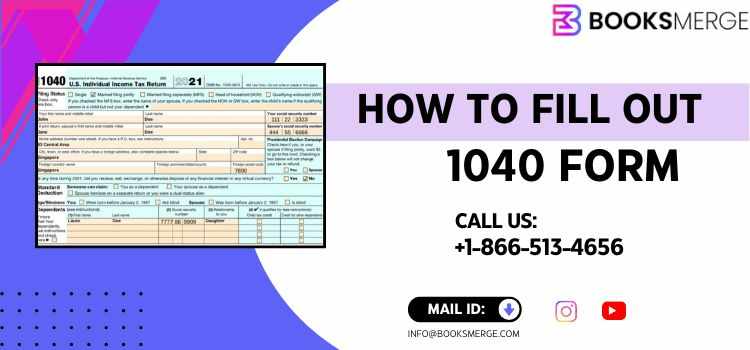
Form 1040 is the IRS tax form used by U.S. individuals to report income, calculate taxes owed, and claim credits or deductions. Proper completion ensures compliance and potential refunds.
Filing taxes can feel like decoding a secret language, but with the right instructions, even a first-time filer can complete an IRS 1040 form confidently. BooksMerge helps taxpayers navigate Form 1040 and related schedules, ensuring accurate filing, maximum deductions, and a stress-free process. Call +1-866-513-4656 for expert guidance.
Table of Contents
What is a 1040 Tax Form?
Who Needs to File Form 1040?
Gather Your Documents
Step 1: Personal Information
Step 2: Filing Status
Step 3: Income Section
Step 4: Adjustments to Income
Step 5: Tax and Credits
Step 6: Other Taxes
Step 7: Payments and Refund
Step 8: Sign and Submit
Form 1040 Schedules Overview
Completed 1040 Form Example – PDF
Tax Price Insight
BooksMerge Support and Tips
FAQs
1. What is a 1040 Tax Form?

IRS Form 1040 is the standard individual income tax return form used in the United States. It helps you:
Report income from wages, investments, or business activities
Claim deductions and credits
Calculate total tax owed or refund due
If you are unsure how to fill out a 1040 form, following clear step-by-step instructions ensures accuracy, avoids penalties, and maximizes potential refunds. Other variants exist, including the 1040-NR form for nonresident aliens. Completing it correctly is essential for smooth filing and compliance with IRS requirements.
2. Who Needs to File Form 1040?
Generally, U.S. citizens and residents with income above certain thresholds must file Form 1040. You also need to file if:
You are self-employed
You received dividends or capital gains
You qualify for tax credits or deductions
Using the correct form ensures compliance with the IRS and can help optimize your tax price.
3. Gather Your Documents
Before you start, collect:
W-2 forms from employers
1099 forms for freelance or investment income
Mortgage interest statements
Charitable donation receipts
Social Security or other benefits documents
Having all documentation ready makes filling out Form 1040 faster and reduces errors.
Step 1: Personal Information
Provide:
Name and Social Security number
Spouse information if filing jointly
Address and contact details
This ensures your tax return is linked correctly to your IRS record.
Step 2: Filing Status
Select one of the following:
Single
Married Filing Jointly
Married Filing Separately
Head of Household
Qualifying Widow(er)
Your filing status affects your standard deduction and tax rates.
Step 3: Income Section
Report all sources of income:
Wages (W-2)
Interest and dividends (including Schedule B Form 1040)
Capital gains
Business income
Other income types (rental, unemployment, etc.)
Accurate reporting here is essential to avoid audits.
Step 4: Adjustments to Income
Adjustments can reduce your taxable income. Include:
Student loan interest
Retirement contributions
Health savings account contributions
These adjustments appear on the Form 1040 schedule 3 if applicable.
Step 5: Tax and Credits
Calculate your tax owed using IRS tables. Claim applicable credits:
Child tax credit
Education credits
Retirement savings contributions credit
Credits reduce your tax liability and may increase refunds.
Step 6: Other Taxes
Include:
Self-employment tax
Additional Medicare tax
Household employment taxes
Ensure you complete this section carefully to avoid underpayment.
Step 7: Payments and Refund
Report payments already made:
Federal income tax withheld from W-2
Estimated tax payments
Excess Social Security tax withheld
This section calculates whether you owe the IRS or are eligible for a refund.
Step 8: Sign and Submit
Sign the return
Include spouse signature if applicable
Date the return
You can file electronically or by mail. Electronic filing speeds processing and refund issuance.
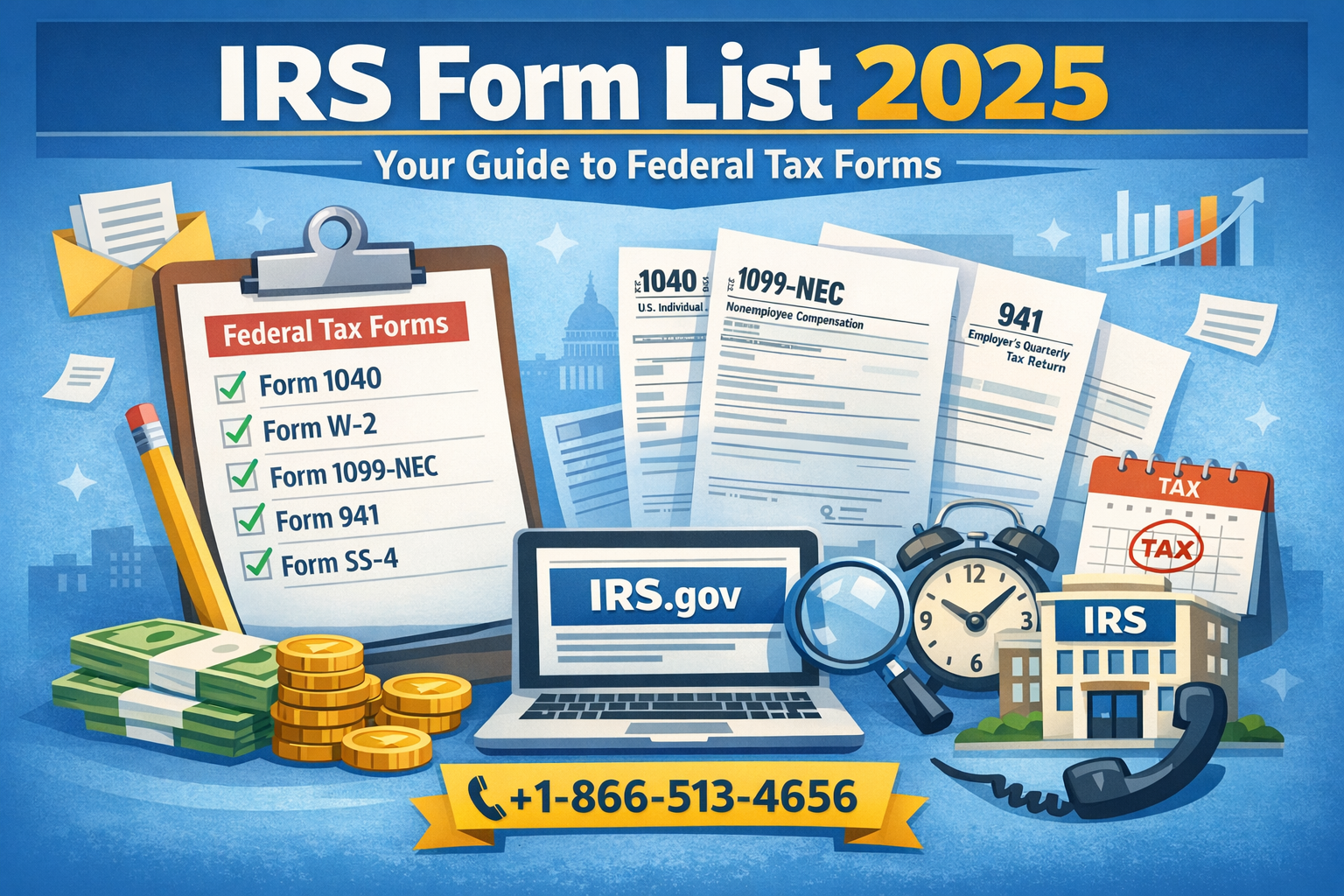
Quick Tip: The IRS form list is a complete directory of official tax forms and schedules used by individuals and businesses to report income, claim deductions, and stay compliant with U.S. tax laws.
4. Form 1040 Schedules Overview
Some taxpayers will need additional schedules:
Schedule 1: Additional income or adjustments
Schedule 2: Tax on certain types of income
Schedule 3: Nonrefundable credits
Schedule B: Interest and dividend income
Schedule C/D/E: Business, capital gains, or rental income
Correct schedule usage ensures accurate reporting and maximizes deductions.
5. Tax Price Insight
Filing taxes accurately affects your tax price. Using professional services or guidance like BooksMerge can help optimize deductions and credits, ensuring you don’t overpay while remaining fully compliant.
6. BooksMerge Support and Tips
BooksMerge helps with:
Accurate Form 1040 completion
Proper use of schedules
Maximizing eligible credits and deductions
Reducing IRS audit risk
Call +1-866-513-4656 to consult with experts who simplify tax filing while saving money.
7. FAQs
1. What is 1040 tax form?
Form 1040 is the standard individual tax return form for reporting income, claiming deductions, and calculating taxes owed or refunds.
2. What is a 1040-NR form?
The 1040-NR form is for nonresident aliens to report U.S. income.
3. How do I use Form 1040 schedule 3?
Schedule 3 is used for reporting nonrefundable credits like education or retirement contributions that reduce tax liability.
4. What is Schedule B Form 1040?
Schedule B reports interest and dividend income if it exceeds certain amounts or comes from multiple sources.
5. Where can I see a completed 1040 form example – PDF?
The IRS provides sample PDFs, and BooksMerge can guide you through reference examples for better accuracy.
6. Can I reduce my tax price by filing correctly?
Yes. Accurate completion, deductions, and credits reduce your tax price, ensuring compliance and optimizing refunds.
7. Who can help me fill out a 1040 form?
Experts like BooksMerge provide step-by-step guidance, schedule usage, and professional support for all taxpayers.
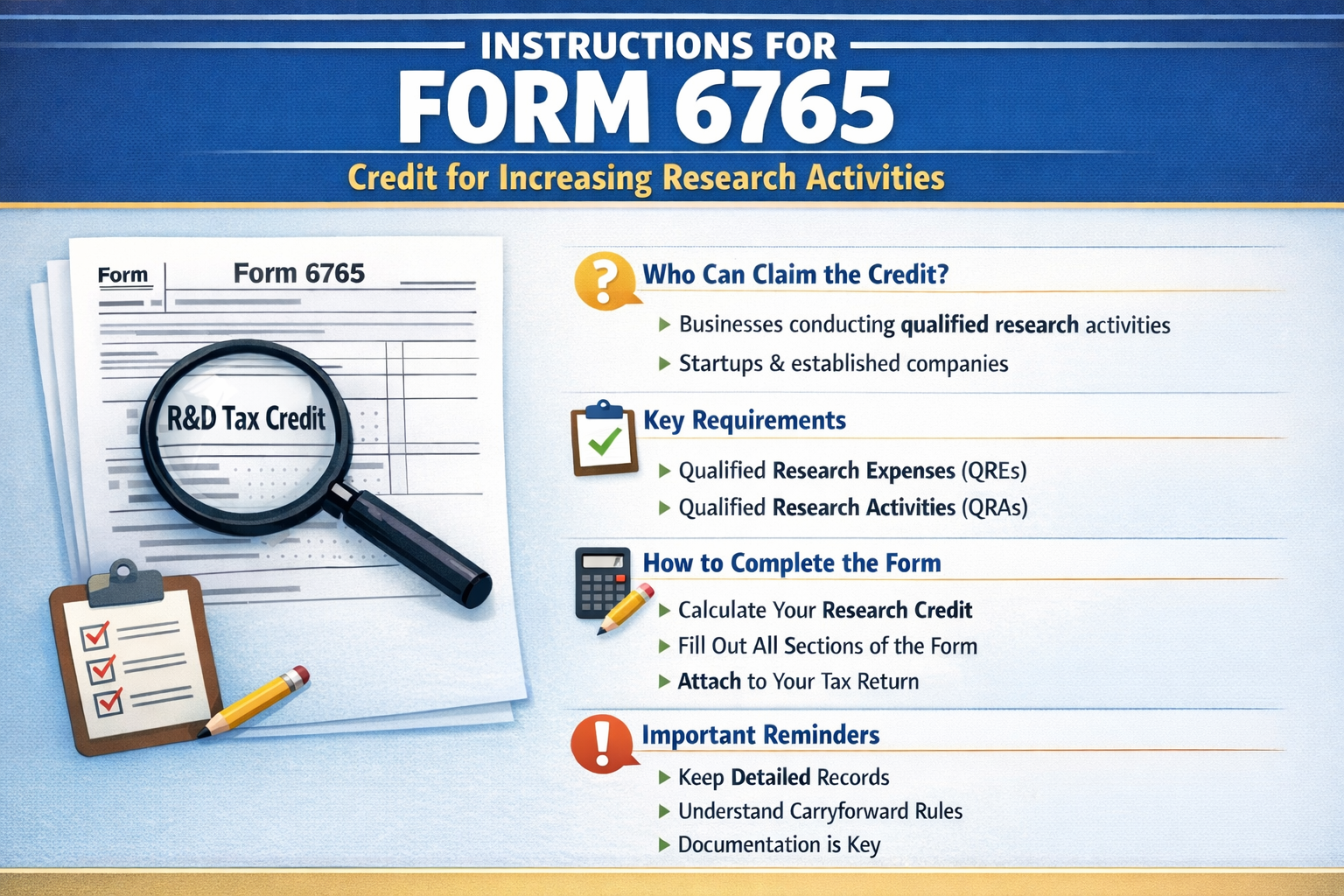
Read Also: Form 6765 Instructions




Write a comment ...